
If you’ve stepped out onto your condo balcony on a July afternoon in Toronto, you’ve likely felt it instantly: that sudden, staggering wall of heat. You’re not imagining it. High-rise balconies often feel significantly hotter than the ground level below, sometimes transforming your desired outdoor oasis into something resembling a concrete pizza oven.
When a classic GTA heatwave settles over the Golden Horseshoe, your private outdoor space can quickly become unusable just when you want to enjoy it most.
Understanding why your balcony traps heat is the first step to cooling it down. Because high-rise buildings are constructed from massive concrete slabs and wrapped in floor-to-ceiling glass panels, they experience a phenomenon known as “thermal mass.” The concrete absorbs the intense summer sun all day long and slowly radiates that heat back out, hours after the sun goes down.
Compounding the issue, the sleek glass railings standard in most modern Toronto condos act as a windshield. While they offer beautiful, unobstructed views of the city or Lake Ontario, they block the natural low-level breezes that would otherwise circulate air across your balcony floor.
Fortunately, you don’t have to retreat indoors until September. With a few smart, bylaw-compliant adjustments, you can beat the heat and reclaim your square footage.
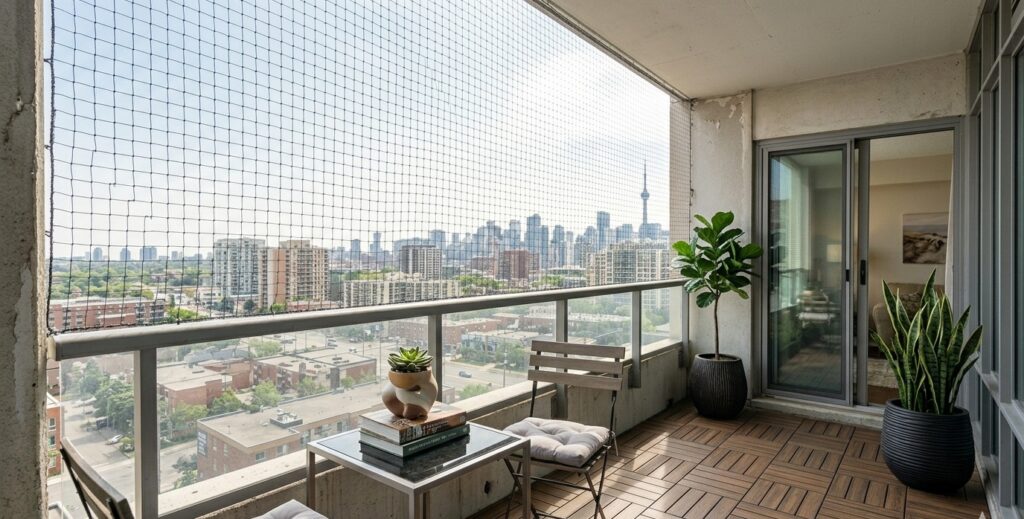
☀️ Top 5 Tips to Cool Down Your High-Rise Balcony This July
1. Introduce Smart, Freestanding Shade
Blocking the sun before it hits your balcony floor is the single most effective way to drop the temperature. Because you cannot drill or anchor anything into the building envelope, look for high-quality, heavily weighted freestanding umbrellas. Push the umbrella base directly against the concrete building wall to maximize wind stability, and always close it tightly when you head inside to prevent high-altitude wind hazards.
2. Create a “Green Shield” with High-Heat Plants
Plants are natural air conditioners. Through a process called transpiration, they release moisture into the air, cooling their immediate surroundings. Build a living privacy screen using heat-tolerant balcony plants like tropical palms, hibiscus, or potted tall grasses. Cluster them together in lightweight resin pots—which retain moisture better than clay in the intense July sun—to create a cooling shade barrier.
3. Swap Out Heavy, Heat-Trapping Fabrics
Dark colors absorb heat, and thick synthetic fabrics hold onto it. If your balcony furniture features heavy, dark grey or black cushions, they will bake in the midday sun. Swap them out for light-colored, breathable outdoor textiles like canvas or woven cotton throws in neutral shades (beige, cream, or light grey) that reflect sunlight and stay cooler to the touch.
4. Utilize the Power of Evaporative Cooling
Before you head outside to relax, give your balcony floor a quick misting. You can use a simple garden spray bottle or a specialized misting fan. As the fine water droplets evaporate off the warm concrete floor or your interlocking deck tiles, they instantly lower the ambient temperature of the immediate air by several degrees. Just remember the high-rise golden rule: keep it to a light mist so water never pools or runs over the edge onto your neighbors below!
5. Ditch the Outdoor Cooking
If you are lucky enough to live in a building that permits electric BBQs on the balcony, save the grilling for the cooler evening hours or late August. Electric grills generate massive amounts of localized ambient heat. When trapped against the building’s glass windows and concrete walls on a stagnant, humid July afternoon, operating a grill will instantly make your outdoor seating area unbearable.