
By the time July rolls around in Toronto, the initial excitement of the spring nursery run has usually met a harsh reality check. Those lush, vibrant plants you carefully selected in May might suddenly look a little tired, droopy, or outright scorched.
You haven’t lost your green thumb. The truth is, high-rise gardening during a GTA summer is an entirely different beast than growing plants in a suburban backyard.
Up on a condo balcony, your plants are exposed to an intense, micro-climate envelope. Surrounded by floor-to-ceiling glass windows that reflect heat and concrete slabs that store it, your balcony effectively mimics a desert environment. Combined with high-altitude wind shears that pull moisture right out of the soil, your green oasis can dehydrate in a matter of hours.
But don’t give up on your balcony garden just yet. With a few strategic, high-rise-specific adjustments, you can help your plants survive the mid-summer peak and keep your outdoor sanctuary looking lush all season long.
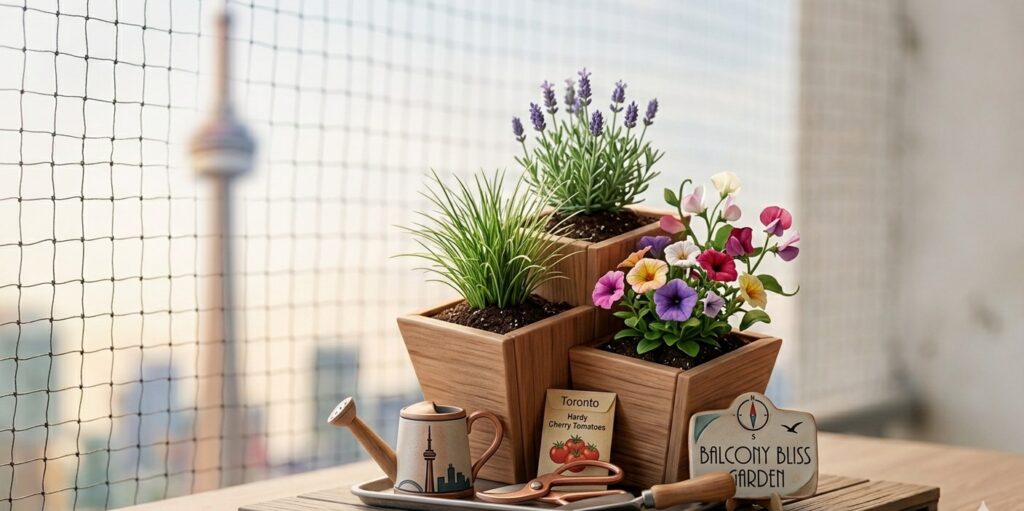
🪴 Top 5 Tips to Protect Your Balcony Garden This July
1. Defeat the High-Rise Wind Tunnel
Wind is the silent killer of urban balcony gardens. High-altitude gusts act like a giant hair dryer, accelerating evaporation from both the leaves and the soil surface. To combat this, group your pots closely together to create a localized micro-climate with higher relative humidity. For structurally vulnerable or trailing plants, utilize the built-in shelter of your condo building’s envelope by placing them closer to the interior brick or concrete walls rather than right up against the railing.
2. Master “Runoff-Free” Watering
Thorough watering is essential in July, but high-rise etiquette means you have to be incredibly careful. Letting muddy, fertilizer-heavy water spill all over your balcony floor—or worse, drip down onto the neighbor below—is a fast track to an angry building management note. Always use deep saucers under every single pot to catch excess moisture. For an extra layer of protection, place a thick microfiber towel beneath the saucers while watering to instantly absorb any accidental spills before they reach the edge.
3. Swap to Moister-Retaining Resin Planters
If your plants are currently sitting in traditional, unglazed terracotta or clay pots, they are losing moisture through the porous walls of the container itself. In the blazing July sun, this causes the soil to bake and shrink away from the edges. Switch to high-quality, lightweight resin or plastic planters. Not only do these keep you well within your condo’s structural weight limits, but their non-porous walls trap critical moisture inside the soil where your plants need it most.
4. Mulch Your Pots Like a Pro
Mulching isn’t just for backyard garden beds. Adding a 1-to-2-inch layer of organic mulch—such as shredded bark, coconut coir, or even smooth river stones—to the top of your condo planters acts as a protective shield. It reflects the harsh afternoon sunlight, lowers the soil temperature, and cuts down on evaporation by up to 50%. This simple step can mean the difference between a plant that thrives and one that wilts by lunchtime.
5. Shield Stressed Roots from Hot Concrete
Because balcony concrete stores massive amounts of thermal mass, your planter pots are essentially sitting on a hot stovetop all afternoon. This bakes the delicate root systems from the bottom up. Elevate your planters off the bare concrete floor by using rolling plant stands, wooden slats, or interlocking deck tiles. Creating even a half-inch air gap beneath the pot breaks the thermal bridge, keeping root zones significantly cooler and happier.