
Mid-Season Reset
By the time June rolls around in the GTA, your condo balcony has likely collected a thick layer of winter leftovers, spring pollen, and blowing downtown construction dust. You’re ready to set up your outdoor oasis, but there’s a major hurdle staring you down: that stubborn, grey urban grime coating your balcony floor.
Cleaning a high-rise balcony isn’t like cleaning a backyard patio. You can’t just hook up a pressure washer, and you certainly can’t dump a bucket of soapy water over the edge. In a condo building, your floor is someone else’s ceiling.
A careless cleaning session can quickly result in dirty water raining down on your neighbor’s expensive outdoor sofa—or worse, a angry note from the property management office.
Here is how to safely execute a deep mid-season floor reset while staying entirely in your neighbors’ (and condo board’s) good graces.
1. The Golden Rule: "Damp, Never Wet"
The absolute most important rule of condo balcony maintenance is that water must never leave the perimeter of your balcony.
Most modern GTA condo balconies are constructed with concrete slabs that slope slightly toward a central drain or outer edge. However, they are not completely waterproof pools. If you flood the floor with buckets of water, that liquid will find its way through the gap between the concrete slab and the glass railing, cascading directly onto the units below.
Instead, your strategy should rely on targeted agitation and absorption: lifting the dirt up into a mop or cloth rather than washing it away.
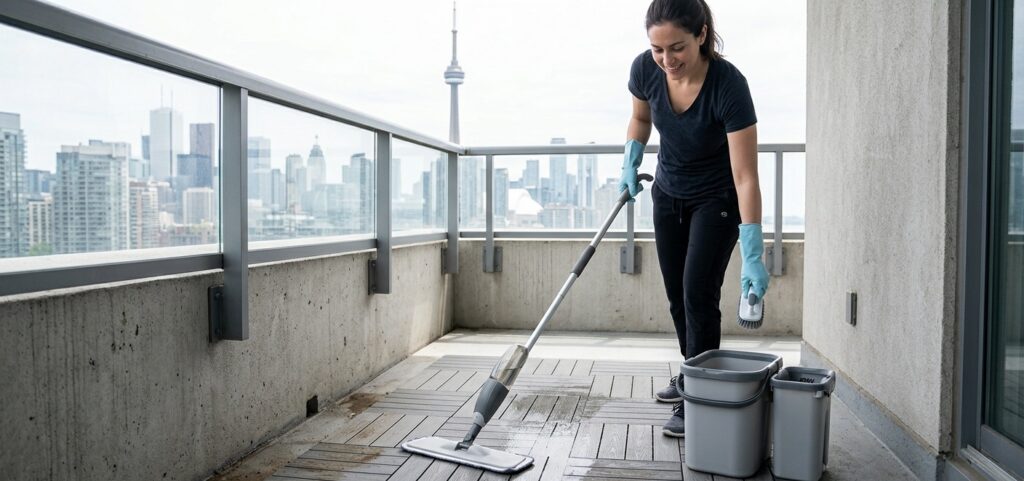
2. Step-by-Step: The High-Rise Floor Deep Clean
Step 1: The Dry Prep (The Most Important Step)
Never start with liquid. If you apply water directly to a dusty balcony, you will instantly create a thick, muddy paste that is twice as hard to clean.
The Tool: Use a stiff-bristled broom and a dustpan to sweep up large debris, dried leaves, and loose dirt.
The High-Rise Trick: Wind can make sweeping impossible. To prevent dust from blowing over the railing into the sky, sweep slowly and push the debris into a corner closest to the building wall. Alternatively, use a vacuum cleaner with a HEPA filter to safely suction up the dust.
Step 2: Spot-Treat Stains
Before tackling the whole floor, look for specific problem areas like rust marks from old furniture, grease from an electric BBQ, or bird droppings.
For Concrete: Mix a paste of baking soda and a few drops of eco-friendly dish soap. Apply it to the stain, let it sit for 15 minutes, and scrub gently with a handheld utility brush.
The Lift: Wipe the paste away completely with a damp microfiber cloth before moving on.
Step 3: The Multi-Stage Mop Method
To get the floor truly clean without runoff, use a two-bucket mopping system or a spray mop (like a Swiffer WetJet or a reusable microfiber spray mop).
The Solution: Mix warm water with a small amount of a low-sudsing, pH-neutral cleaner. Avoid harsh chemicals or heavy soaps that require massive amounts of water to rinse out.
The Action: Scrub a 3×3 foot section at a time. Keep the mop damp, not dripping wet. Use a second bucket of clean water to rinse your mop head frequently, wringing it out thoroughly each time so you are always absorbing grime rather than spreading it around.
3. Material-Specific Care: Concrete vs. Deck Tiles
How you finish your deep clean depends entirely on what you are walking on:
Bare Concrete: Unsealed concrete loves to hold onto grey city soot. If your concrete still looks dingy after mopping, a stiff deck brush paired with a heavily wrung-out scrub mop is your best bet to lift the deep-set dirt out of the porous surface.
Interlocking Deck Tiles (Wood or Composite): If you have floating deck tiles, never let water pool in the slats. Wood tiles should be wiped down with a wood-safe cleaner along the grain. Ensure you don’t use excessive water, as moisture trapped underneath the tiles can lead to mold growth against the concrete slab.
🧼 Balcony Floor Cleaning FAQ
Here are the answers to the most common questions GTA condo owners ask about keeping their flooring spotless:
Can I use a pressure washer on my condo balcony if I'm really careful?
In 99% of GTA condos, no. Pressure washers use high volumes of water that are impossible to contain on a standard balcony. The overspray will inevitably drift onto neighboring units, blast dirt onto your own windows, and push water past the structural barriers of your balcony. Using one is a fast track to a warning letter or a fine from your condo board. That said, let the professionals handle the washing up
What is the best eco-friendly cleaner that won't harm pets or building concrete?
Plain warm water mixed with a small amount of castile soap or a specialized pH-neutral stone and concrete cleaner is ideal. Avoid using vinegar or highly acidic cleaners on bare concrete, as acid can chemically etch and weaken the concrete over time. Additionally, eco-friendly dish soaps ensure that if a few stray drops do happen to catch the wind, they aren’t toxic to the environment below.
There is mold/slime growing under my interlocking balcony deck tiles. How do I clean it?
This is a common issue in humid Toronto summers. You will need to pop up the interlocking tiles in the affected area. Vacuum the bare concrete beneath to remove trapped dirt, then wipe the concrete slab down with a heavily wrung-out cloth dipped in a diluted water-and-rubbing-alcohol solution to kill the spores. Let the concrete dry completely in the sun before snapping the tiles back into place.
How do I clean bird droppings off my balcony floor safely?
Dried bird droppings can carry harmful bacteria and pathogens, so you should never sweep them dry, as this airborne dust can be inhaled. Spray the area with warm water or a disinfectant cleaner to completely dampen it first. Once wet, scrape the residue up carefully with a plastic putty knife, wipe it clean with disposable paper towels, and discard them immediately in a sealed trash bag.