
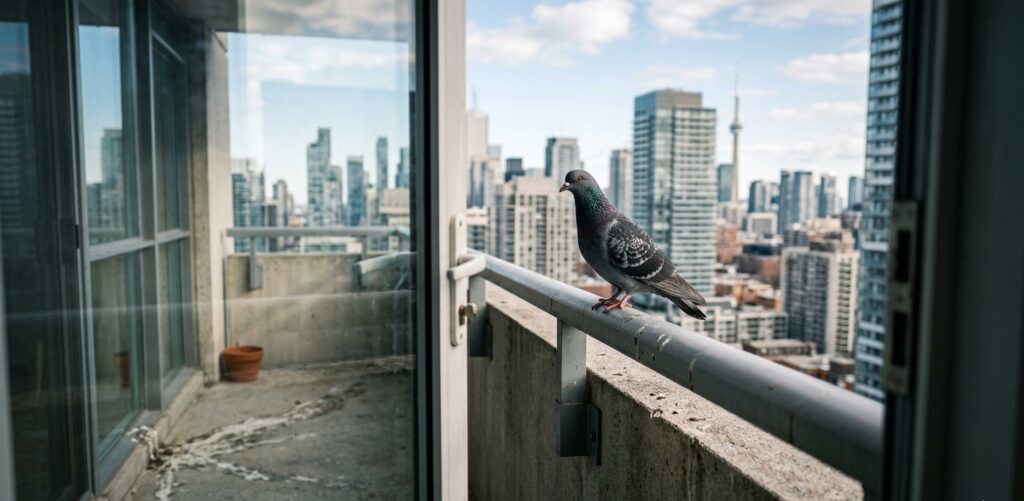
Living in the GTA means sharing the sky with thousands of pigeons. But when they decide your balcony is their new luxury penthouse, it’s a problem. Between condo bylaws and city regulations, many residents aren’t sure what they are actually allowed to do.
Here are the answers to the most common questions about reclaiming your outdoor space.
1. Is it legal to install pigeon netting on my balcony?
The Short Answer:
It depends on your Condo Declaration.
While there is no City of Toronto law forbidding netting, most Condo Corporations have strict “Uniformity of Appearance” bylaws. This means you cannot bolt anything to the building’s exterior or hang material that changes the look of the facade.
The Workaround: Many boards will approve “invisible” professional-grade polyethylene netting if installed by a certified contractor. Always submit an Alteration Agreement to your board before buying a kit online.
2. Can I use spikes or "bird gel" to keep them off the railing?
The Short Answer:
Yes, but be mindful of “cruelty” vs. “deterrence.”
Physical deterrents like blunt-tipped stainless steel spikes or sticky transparent gels are legal and generally effective for railings.
The Practical Tip: Avoid the cheap plastic “carpet” spikes; pigeons often find ways to sit right on top of them. High-quality stainless steel spikes are harder for them to navigate.
Warning: Never use “tanglefoot” or glue traps that can actually harm or trap the birds, as this can lead to complaints regarding animal welfare.
Book your balcony cleaning today. Let us take care of the mess so you can enjoy your outdoor space.
3. What should I do if I find a pigeon nest with eggs?
The Short Answer:
Stop and check the species.
Pigeons (Rock Doves) are actually one of the few birds not protected by the federal Migratory Birds Convention Act. However, most people prefer to handle them humanely.
The Strategy: If the eggs haven’t hatched, you are generally allowed to remove the nesting material (check your local bylaws first). If they have hatched, it’s best to wait 4–5 weeks for the fledglings to leave, then immediately deep-clean and “proof” the area so they don’t return for a second round.
4. Do those plastic owls or ultrasonic devices actually work?
The Short Answer:
Rarely, and usually not for long.
Pigeons are “urban-adapted” and very smart. They will quickly realize that the plastic owl hasn’t moved in three days and will eventually sit on its head.
The Better Solution: Reflective “scare tape” or spinning reflective disks are more effective because the movement and light patterns are unpredictable. However, for a permanent fix, physical exclusion (netting or sloped railing covers) is the only 100% effective method in a high-density city like Toronto.
5. Can I be fined for having a dirty balcony?
The Short Answer:
Yes.
Most Toronto condos classify balconies as Limited Common Elements. This means while you have exclusive use of it, the corporation has the right to demand you keep it clean. Pigeon droppings (guano) are acidic and can damage the concrete and metal railings over time. If your balcony becomes a health hazard or a visual blight, the board can hire a professional cleaner and “charge back” the cost to your maintenance fees.
Pro Tip:
Cleaning up after pigeons is a health risk. Always wear a mask (N95) and gloves, and dampen the droppings with water or a disinfectant before scraping to prevent breathing in dust. Or just contact us for a quote >>